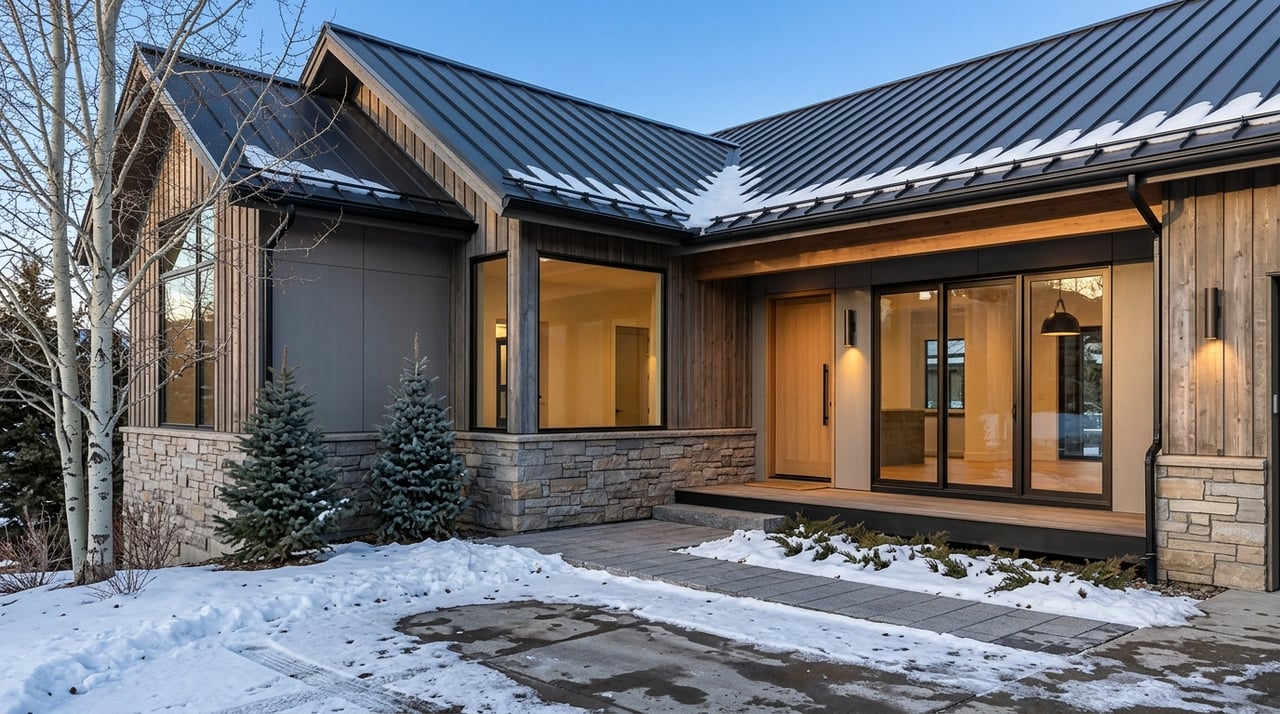
Wondering why so many luxury homes in Hideout feel both crisp and grounded at the same time? That balance is not an accident. In Hideout, modern mountain architecture is shaped by the land, the views, and local design standards, which means understanding the style can help you buy smarter and appreciate what gives these homes lasting appeal. Let’s dive in.
What Defines Hideout’s Modern Mountain Style
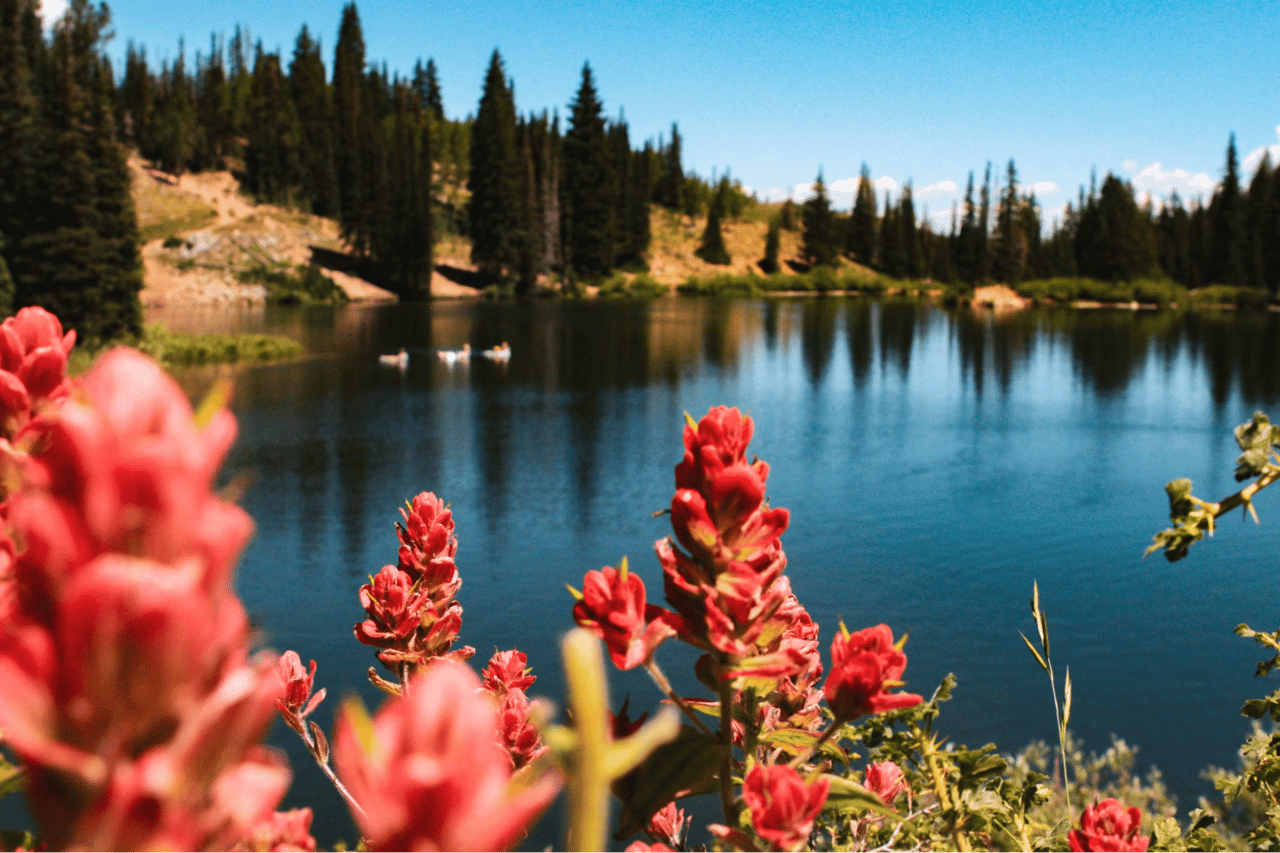
Hideout sits east of Park City above Jordanelle Reservoir, and the town’s planning approach is deeply tied to the landscape. Local standards emphasize preserving terrain, drainage, vegetation, and viewsheds, while encouraging buildings to blend into the natural setting.
That is why many luxury homes here feel integrated with the hillside instead of oversized or visually loud. The overall effect is a market where architecture is expected to support the scenery, not compete with it.
Why the Setting Shapes the Architecture
Broad views of the Wasatch Back, Deer Valley Resort, and Jordanelle Reservoir are a major part of Hideout’s appeal. Local guidelines place clear value on preserving significant views from and through a site, even though no specific view easement is guaranteed.
For you as a buyer, that makes orientation especially important. Homes with thoughtful window placement, well-positioned decks, and strong indoor-outdoor flow often make the most of what Hideout offers every day.
A Landscape-First Design Approach
Hideout’s standards also reflect practical mountain-living concerns. The town regulates nighttime lighting to reduce glare and skyglow, and community design review often focuses on minimizing grading, screening utilities, and keeping homes visually connected to the land.
That means the best-looking homes here usually age well because they respond to the site itself. They tend to feel calm, intentional, and natural in every season.
The Core Materials You’ll See
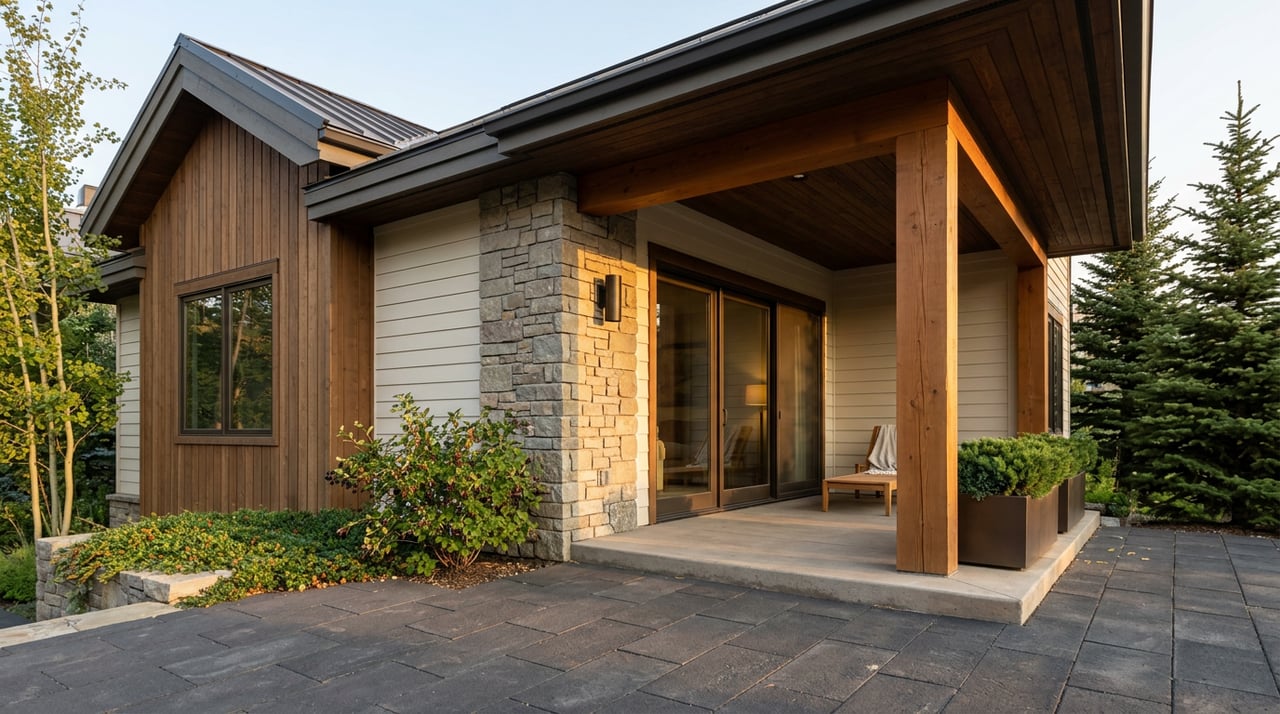
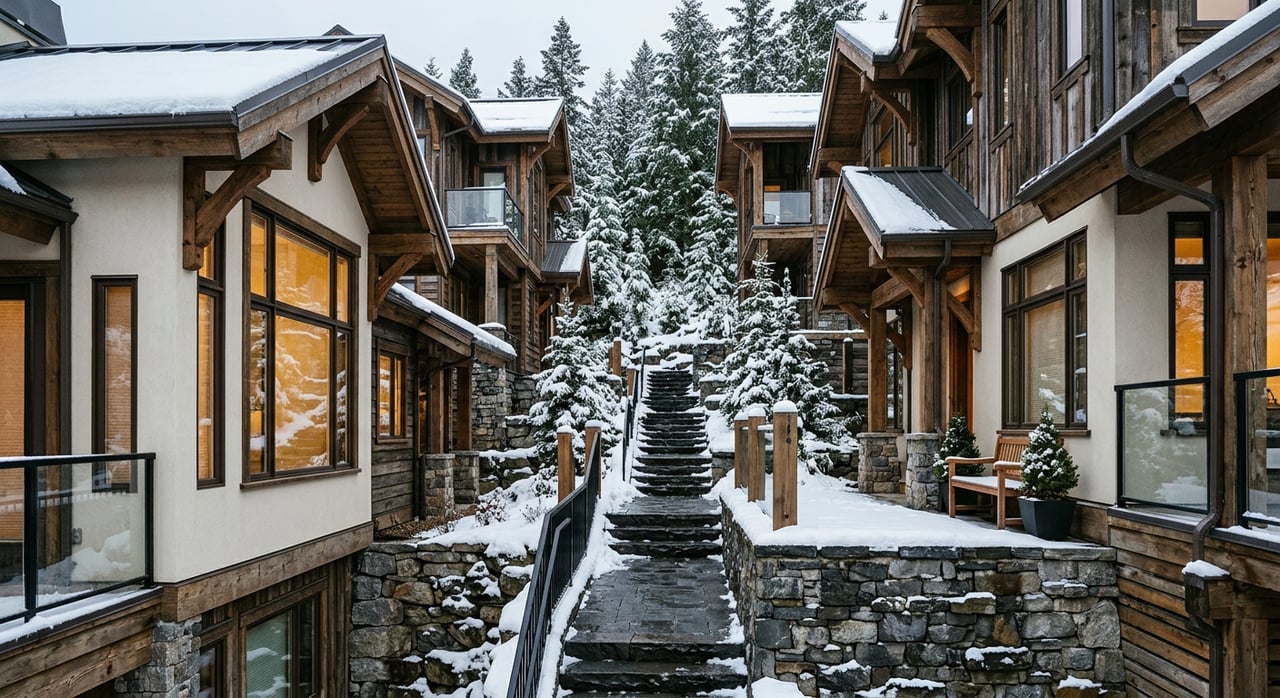
Modern mountain architecture in Hideout is not the same as urban minimalism. The local design language leans on natural stone, stained wood, stucco, and limited steel, with warm earthy or muted natural colors preferred.
Bright, highly reflective, or synthetic-looking finishes are generally discouraged. Nonreflective roof surfaces are also favored, which helps homes feel softer and more at home in the surrounding mountain environment.
Warm Materials, Clean Lines
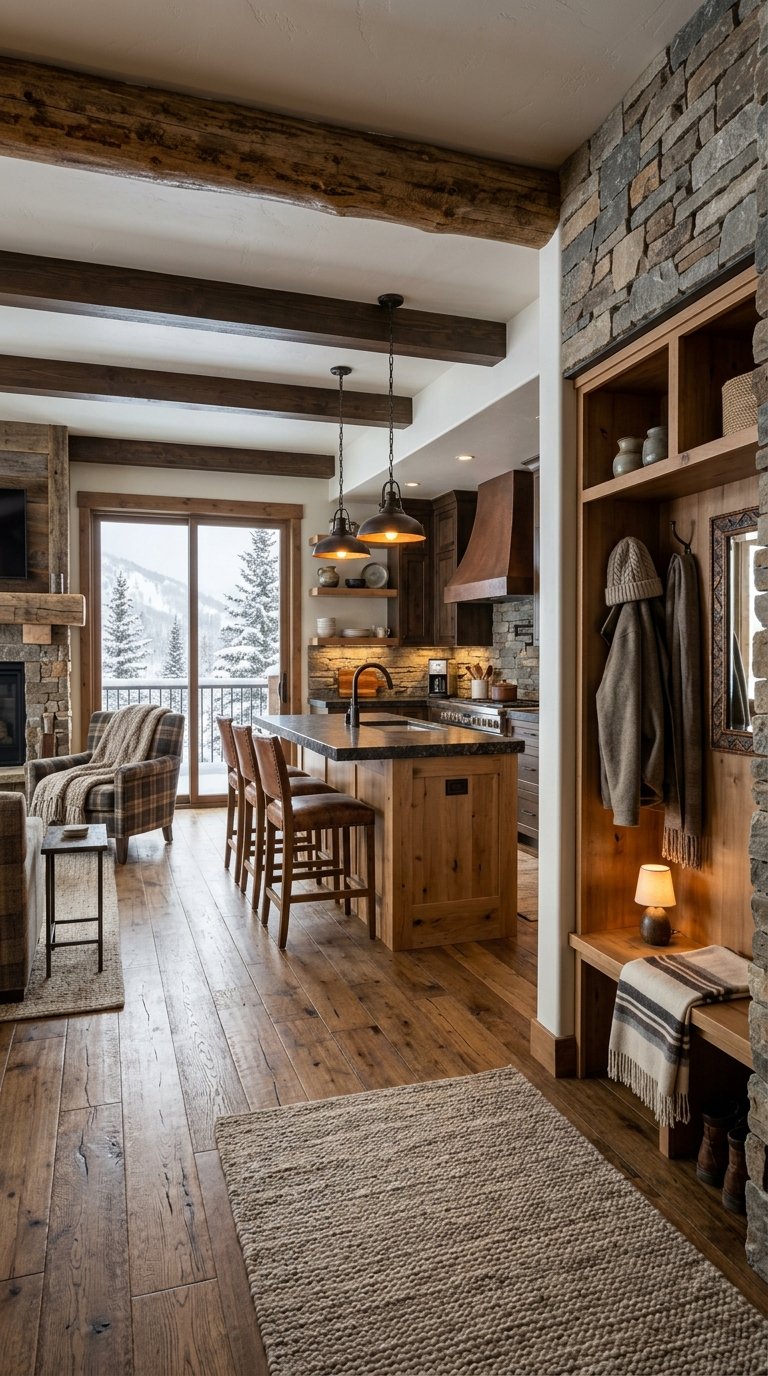
One of the reasons Hideout homes stand out is the way they combine contemporary restraint with mountain character. You may see a clean-lined exterior and expansive glass, but those features are usually balanced by wood, stone, and textured surfaces.
In simple terms, the style lives between a refined mountain cabin and a contemporary view home. That middle ground is what gives Hideout much of its visual identity.
Rooflines Matter More Than You Think
If you want to spot local architectural character quickly, look at the roof. Hideout’s code allows pitched roofs and limited integrated flat-roof area, while Hideout Canyon guidelines favor gable-dominant forms with roof slopes generally between 3/12 and 8/12.
Pure flat roofs are not the dominant look here. Even when a home has modern accents, those details are typically layered onto a roof form that still reads as mountain architecture.
Why Gable Forms Work So Well
Fragmented roof forms help break up a home’s bulk and make larger luxury residences feel more scaled to the land. In a place where snow, terrain, and long-distance views all matter, that approach feels both practical and visually appropriate.
For buyers, this often translates into homes that feel substantial without feeling harsh. It is one of the clearest reasons Hideout’s luxury homes can look current without feeling trendy.
Glass, Views, and Natural Light
Hideout design standards favor rectangular openings and discourage long horizontal or vertical window bands. The goal is for glazing to fit the building rather than overwhelm it.
At the same time, many homes in Hideout Canyon show how glass-forward the style can become when done well. Floor-to-ceiling windows, vaulted ceilings, and exposed timber beams are all part of the local high-end expression of modern mountain design.
The Best Homes Use Glass Intentionally
In Hideout, more glass is not always better. The strongest homes typically use glazing to frame views, bring in natural light, and connect interior gathering spaces to decks and patios.
That distinction matters if you are comparing properties. A home with intentional window placement can feel more private, more comfortable, and more visually balanced than one that simply maximizes glass for effect.
Outdoor Living Is Part of the Design
In Hideout luxury homes, exterior living space is part of the architecture from the start. Decks, porches, and patios are expected to support indoor-outdoor living and capture the surrounding scenery.
Local guidelines also call for screening mechanical equipment, meters, and similar utility features. That helps preserve the clean, uncluttered appearance buyers often associate with higher-end mountain homes.
What Buyers Often Notice First
When you walk a strong Hideout property, the outdoor spaces usually feel tied directly to the main living areas. Large decks, covered seating areas, and transitions from great room to exterior space often make the home feel bigger and more usable.
In a view-driven market, that kind of layout can have a real impact on daily enjoyment. It is also one of the features that tends to remain attractive over time.
How Hideout Communities Differ
Not every Hideout neighborhood expresses modern mountain architecture in exactly the same way. The overall design language is consistent, but lot size, massing, and permitted building scale shape how each community feels.
That is useful to know if you are comparing options based on privacy, home size, and the kind of mountain-luxury experience you want.
Hideout Canyon
Hideout Canyon is the clearest example of the custom view-home model. Its guidelines emphasize preserving significant views, keeping roof forms generally gable-based, minimizing grading, and encouraging landscaping that works with the natural site.
This is where you most often see the classic Hideout combination of natural stone, wood, expansive glass, and large decks. The overall impression is custom, view-oriented, and closely tied to the slope and surrounding vegetation.
Soaring Hawk
Soaring Hawk follows the same mountain design language, but in a more compact format. Guidelines generally limit homes to about 2,000 to 3,500 square feet, with a 32-foot height cap and somewhat tighter dimensional allowances.
For you, that often means a more efficient footprint with a contemporary feel and strong connection to the views. It can appeal to buyers looking for a lower-maintenance luxury option without leaving the Hideout aesthetic behind.
Golden Eagle
Golden Eagle is the most estate-oriented of the three. Guidelines allow homes from 3,200 to 7,000 square feet, and certain combined lots may allow a larger compound arrangement with a main house, guest house, detached garage, and auxiliary structure, subject to design review.
The result is a more private, expansive feel while still staying within Hideout’s mountain palette. If you are looking for scale and separation, this is often the community that best fits that goal.
What Tends to Hold Value Best
In Hideout, the homes that tend to feel most timeless usually do a few things well. They respect the site, use natural materials, frame the views carefully, and support outdoor living without overbuilding the lot.
Features tied to climate fit also matter. Deep eaves, nonreflective roofs, fire sprinklers, dark-sky lighting, screened mechanicals, limited grading, and xeriscape-style planting all reflect the realities of mountain weather, wildfire risk, water sensitivity, and night-sky protection.
Look for Architecture That Fits the Place
If a home feels too glossy, too ornate, or too disconnected from the land, it may not align as naturally with Hideout’s design standards. By contrast, homes that respond well to the terrain and local palette often feel more enduring.
That can matter whether you are buying for personal use, future resale, or long-term asset quality. In a design-conscious mountain market, fit with the setting is part of the value story.
Why This Matters When You Buy or Sell
Architecture is not just a style preference in Hideout. It shapes how a home lives, how it presents in the market, and how well it aligns with local expectations.
If you are buying, understanding the difference between true modern mountain design and a generic contemporary look can help you evaluate quality and long-term appeal. If you are selling, recognizing the architectural strengths of your property can improve how it is positioned and marketed to the right audience.
For buyers, sellers, and owners who want a more informed read on Hideout luxury homes, local context matters. If you are exploring Hideout or comparing it with other Park City-area luxury communities, Richard Taleghani can help you evaluate architecture, lifestyle fit, and long-term property value with a clear local perspective.
FAQs
What is modern mountain architecture in Hideout, Utah?
- Modern mountain architecture in Hideout blends contemporary design with natural materials like stone, stained wood, stucco, and limited steel, usually in muted earth-tone palettes that fit the landscape.
What roof styles are common in Hideout luxury homes?
- Hideout homes commonly feature pitched, gable-dominant rooflines with limited flat-roof elements, rather than pure flat-roof contemporary forms.
What makes Hideout Canyon architecture different from Soaring Hawk or Golden Eagle?
- Hideout Canyon is more custom and view-home focused, Soaring Hawk is generally more compact and efficient in scale, and Golden Eagle allows a larger estate-style format.
Do Hideout design rules protect views from every home?
- Hideout guidelines emphasize preserving views from and through a site as much as possible, but they also state that no view easement is guaranteed.
What features should buyers look for in Hideout luxury homes?
- Buyers often focus on orientation, intentional glazing, outdoor living spaces, natural materials, gable-based roof forms, and site-sensitive design that fits the terrain and views.